
Finance
Bank of Korea to Resume Gold Purchases After 13-Year Hiatus
The Bank of Korea is set to buy physical gold for the first time since 2013, a move driven by geopolitical concerns and a desire to diversify storage locations. However, the scale of purchases is expected to be modest, given the limited domestic supply of gold.
The central bank's planned gold buying reflects a shift in reserve strategy amid rising geopolitical risks.
Entities & knowledge links
Executive summary
The Bank of Korea is set to buy physical gold for the first time since 2013, a move driven by geopolitical concerns and a desire to diversify storage locations. However, the scale of purchases is expected to be modest, given the limited domestic supply of gold.
The Bank of Korea is preparing to resume gold purchases after a 13-year absence, marking a notable shift for the institution. The last time the bank bought gold was in 2013. According to reports, the purchases will be made domestically, utilizing gold that would otherwise be exported. The head of reserves at the Bank cited geopolitical risks as a significant factor motivating this renewed interest in gold, aligning with a broader trend among central banks to diversify their reserve assets.
The plan is still in its early stages, with no decisions made regarding the timing or scale of the purchases. South Korea produces approximately 40 to 45 tonnes of gold annually, primarily as a byproduct of copper and zinc smelting. Of this total, only around 4 to 5 tonnes are typically available for export, which is the portion the central bank would target under its current plan.
This development comes at a time when global central bank gold purchases reached a record high of 289 tonnes in the second quarter of 2023, underscoring a growing trend of central banks reassessing their reserve strategies amid ongoing geopolitical uncertainties. While the Bank of Korea's planned purchases are likely to remain modest, the decision to re-enter the gold market after such a long hiatus adds to the narrative of central banks adapting their reserve strategies in response to changing global dynamics.
Market impact
This article presents verified public information. Price reaction depends on liquidity and what was already priced in — no directional call is made here.
Institutional framing
TradingBase presents market updates in an institutional financial-news format. This is not investment advice.
Market watch
Track the economic calendar at Economic Calendar, price action at Markets, and signals at Signals.
NIC · Impact scores
Global: 60 · Market: 60 · Urgency: 50 · Confidence: 90 · Bullish
Themes: rates, geopolitics, precious_metals
Asset impact
- Gold — Bullish (67) · Gold leans bullish based on headline/body drivers.
- Commodities — Bullish (67) · Commodities leans bullish based on headline/body drivers.
Market reaction
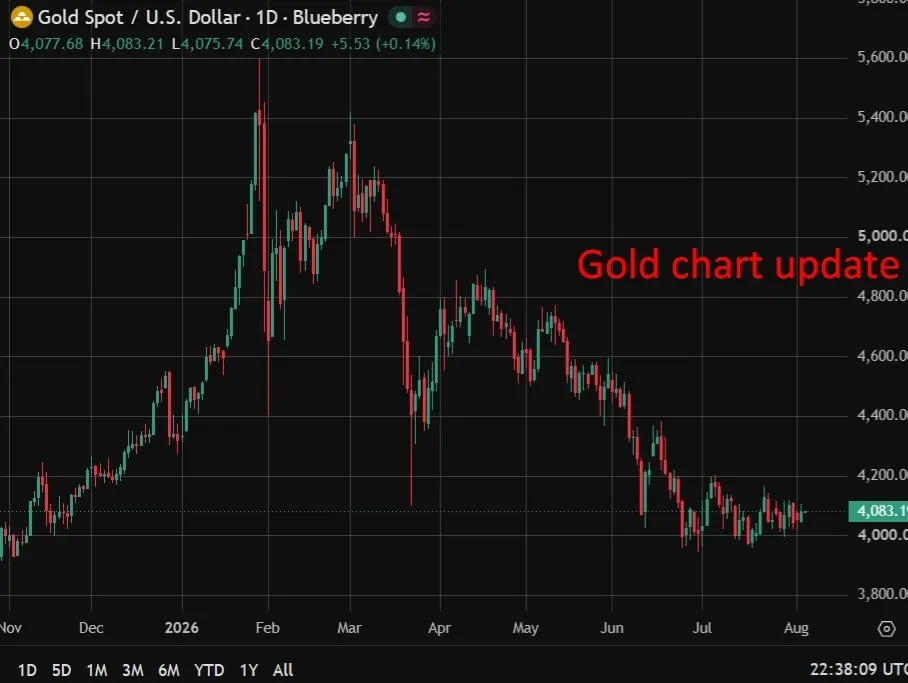
- XAUUSD: 4066.295 → 4066.295 (0%) · T-15m / T0 / T+15m / T+60m
- DJP: Price snapshot pending · T-15m / T0 / T+15m / T+60m
Trading insight
Analysis only. Not a trade signal. Not investment advice. No Entry/TP/SL is generated by NIC.
Scenarios
- Continuation if confirmation holds after the news window.
- Whipsaw risk is elevated inside the first 15–60 minutes after release.
- For XAUUSD, map USD/rate impulse first, then confirm direction on M15 structure.
Watch factors
- Actual vs forecast surprise (priced-in risk)
- USD / yields impulse if macro-sensitive
- Liquidity and spread during the news window
- Follow-through after T+15m / T+60m
- Relative reaction in gold
- Relative reaction in commodities
Related knowledge
XAUUSD
Matched terminology in article
Macro & Gold Foundations
Macro-sensitive topic
US Stocks Reach New Heights Amid Mixed Catalysts
Related news correlation
S&P and NASDAQ Indices Reach New Record Highs
Related news correlation
Federal Reserve Approves Coastal Bend Bancshares Application
Related news correlation
Federal Reserve Board Approves FS Bancorp, Inc. Application
Related news correlation
Federal Reserve Approves Application from Banco Santander and Santander Holdings USA
Related news correlation
Library
Research depth for related concepts
Ask AI about this article
Answers are grounded in the published article “Bank of Korea to Resume Gold Purchases After 13-Year Hiatus” and NIC scores — no invented figures.