
Economics
Federal Reserve Chair Warsh Considers Reducing Meeting Frequency
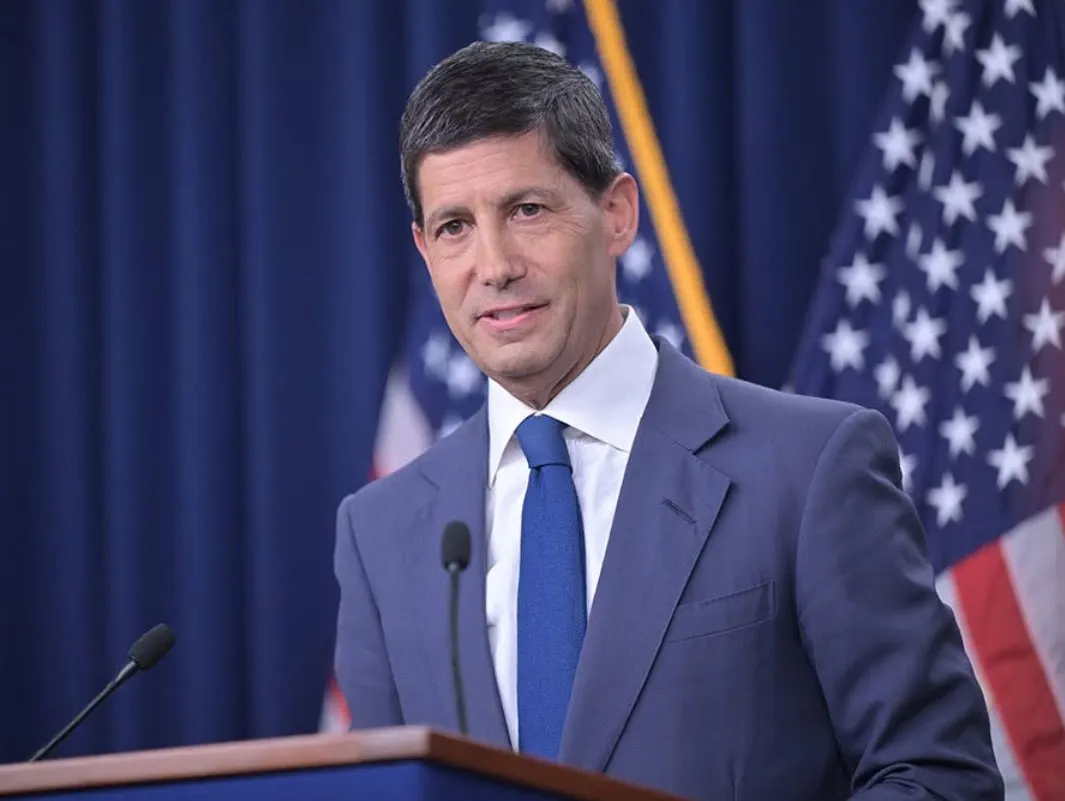
Federal Reserve Chair Kevin Warsh is reportedly contemplating a significant reduction in the number of policy meetings held annually, potentially cutting the current eight sessions down to six. This change, if implemented, would mark the most substantial alteration to the Fed's meeting schedule in decades and could impact how markets respond to economic data and Fed communications.
A potential shift in the Fed's policy-making process could reshape market expectations.
Entities & knowledge links
Executive summary
Federal Reserve Chair Kevin Warsh is reportedly contemplating a significant reduction in the number of policy meetings held annually, potentially cutting the current eight sessions down to six. This change, if implemented, would mark the most substantial alteration to the Fed's meeting schedule in decades and could impact how markets respond to economic data and Fed communications.
Federal Reserve Chair Kevin Warsh is reportedly considering a reduction in the number of policy meetings the central bank holds each year, according to a report by the New York Times. The proposal suggests cutting the current schedule from eight meetings to six rate-setting sessions annually, supplemented by two additional meetings focused on broader economic issues. Any decision on this new schedule could be made prior to the Fed's September meeting.
The current eight-meeting schedule has been standard since the 1980s, and the Federal Reserve Act mandates a minimum of four meetings per year, allowing Warsh to implement this change without congressional approval. A reduction in meetings would alleviate the workload associated with preparing briefing materials and public communications but would also limit the Fed's routine opportunities to adjust interest rates in response to evolving economic conditions.
Traders may need to recalibrate their expectations regarding emergency meetings, as fewer scheduled sessions could widen the gap between economic data surprises and Fed responses. This shift aligns with Warsh's broader approach of adopting a more restrained communications style, potentially increasing the market's reliance on economic data releases rather than Fed commentary between meetings.
The implications of fewer meetings include a trade-off between reduced procedural burdens and diminished flexibility in responding to economic changes. If inflation accelerates unexpectedly or the labor market weakens sharply, the Fed would have to either wait for the next scheduled meeting or convene an unscheduled emergency session to address urgent issues. This potential change is likely to be a focal point of discussion as the Fed approaches its September meeting.
Market impact
This article presents verified public information. Price reaction depends on liquidity and what was already priced in — no directional call is made here.
Institutional framing
TradingBase presents market updates in an institutional financial-news format. This is not investment advice.
Market watch
Track the economic calendar at Economic Calendar, price action at Markets, and signals at Signals.
NIC · Impact scores
Global: 85 · Market: 90 · Urgency: 80 · Confidence: 90 · Neutral
Themes: inflation, rates, geopolitics
Asset impact
- US Stocks — Neutral (55) · US Stocks mentioned with balanced cues.
- Indices — Neutral (55) · Indices mentioned with balanced cues.
Market reaction
- SPX: Price snapshot pending · T-15m / T0 / T+15m / T+60m
- US30: Price snapshot pending · T-15m / T0 / T+15m / T+60m
Trading insight
Analysis only. Not a trade signal. Not investment advice. No Entry/TP/SL is generated by NIC.
Scenarios
- Two-way reaction likely until the market digests the data surprise vs forecast.
- Whipsaw risk is elevated inside the first 15–60 minutes after release.
- Watch correlated assets for confirmation rather than reacting to the headline alone.
Watch factors
- Actual vs forecast surprise (priced-in risk)
- USD / yields impulse if macro-sensitive
- Liquidity and spread during the news window
- Follow-through after T+15m / T+60m
- Relative reaction in us_stocks
- Relative reaction in indices
Related events
Related knowledge
Fed's Williams Acknowledges Market Pricing but Emphasizes Independence in Policy Decisions
Related news correlation
Macro & Gold Foundations
Macro-sensitive topic
Swiss Inflation Steady in July Amid Deflation Concerns
Related news correlation
Atlanta Fed GDPNow Growth Estimate Increases to 6.2%
Related news correlation
S&P Global Manufacturing PMI Holds Steady at 53.9 for July
Related news correlation
Euro Area Manufacturing Activity Shows Signs of Recovery in July Amid Weak Demand
Related news correlation
TradingBase Library
Research depth for related concepts
Ask AI about this article
Answers are grounded in the published article “Federal Reserve Chair Warsh Considers Reducing Meeting Frequency” and NIC scores — no invented figures.